
Indian equity benchmark indices extended losses for a second consecutive session, with the Sensex dropping 143 points, driven by a sell-off in power, banking, and financial stocks, coupled with elevated crude oil prices and persistent FII selling.

BrahMos is a benchmark for India's emerging export story with exports to cross $600 million, defence secretary Rajesh Kumar Singh has said and noted that there are contracts or agreements to sell the high-end strategic system to three Southeast Asian countries including Indonesia and Vietnam.
Indian benchmark indices Sensex and Nifty experienced declines in early trade, influenced by the Reserve Bank of India's (RBI) recent repo rate hike and its signal for continued monetary tightening, coupled with rising crude oil prices and foreign fund outflows. Track Sensex, Nifty on October 8.

Indian benchmark stock indices, Sensex and Nifty, rallied significantly, with Sensex jumping over 1,500 points and Nifty reaching a nearly three-week high, driven by strong buying in banking, IT, and Reliance Industries stocks, alongside easing crude oil prices.

Jio Platforms Ltd's (JPL) public offer, valued at Rs 30,213 crore, was fully subscribed within 100 minutes of opening, making it the fastest-ever subscribed IPO in India, driven by strong institutional demand.

Indian government bond yields have recorded their worst losing streak in three decades, rising for the tenth consecutive week, driven by elevated crude oil prices and increasing global yields. The rupee also weakened, and India's foreign exchange reserves saw a significant decline.

A dozen companies, including major players like Jio Platforms and Zetwerk Manufacturing Business, are poised to launch Initial Public Offerings (IPOs) in October, continuing India's strong fundraising momentum in the primary market. These offerings span diverse sectors, reflecting sustained investor interest in businesses with robust growth prospects.

Investors are set to monitor quarterly earnings, crude oil prices, the Jio Platforms initial public offering, and foreign investor activity in the upcoming holiday-shortened week, according to market analysts.

Jio Platforms Ltd's Rs 30,213-crore initial public offering (IPO) achieved full subscription within 100 minutes of opening, making it the fastest among India's mega issues, surpassing previous records set by companies like Reliance Power.

Tata Consultancy Services (TCS) announced a 15 per cent increase in net profit, reaching Rs 13,884 crore for the September quarter, driven by an 11.22 per cent rise in revenue from operations.

Active and passive funds offer different advantages across market-cap segments, making a mix of both a sensible portfolio strategy.

The Unified Payments Interface (UPI) has completed a decade since its launch, becoming the backbone of India's digital payments ecosystem. It has seen exponential growth in transaction volume and value, expanding financial inclusion and setting a global benchmark for real-time payments.

Analysts predict that the Reserve Bank of India's interest rate decision, crude oil prices, and global bond yields will be the primary factors influencing the Indian stock market this week, alongside macroeconomic data and foreign investor activity.

India faces a challenging Asian Para Games in Aichi-Nagoya with a significantly smaller contingent of 168 athletes, down from 303. While aiming to build on its record 111-medal haul from the last Games, selection disputes in para-shooting and para-cycling, coupled with reduced athlete numbers in key disciplines like para-athletics, pose hurdles. Despite these challenges, star athletes across para-athletics, archery, para-badminton, shooting, and table tennis are expected to lead India's medal charge.

Indian benchmark indices, Sensex and Nifty, experienced a sharp decline, with the Sensex tumbling 1,247.71 points and the Nifty settling below 23,100, primarily driven by a significant spike in crude oil prices and weak global market trends.

Indian stock markets experienced a significant downturn, with the Sensex plunging 1,124 points to a six-month low and the Nifty closing below 22,800, driven by surging crude oil prices, escalating geopolitical uncertainties, and weak global market trends.
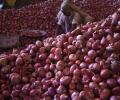
India's retail inflation surged to 5.54 per cent in September, primarily due to a significant increase in onion and other food prices, remaining just within the Reserve Bank of India's tolerance band. This marks the highest inflation since the new series with base year 2024 took effect in January.

The Insurance Regulatory and Development Authority of India (Irdai) has proposed a phased reduction in the expenses of management (EoM) limits for insurers, aiming to lower the overall cost of insurance and enhance returns for policyholders. The proposals also include a new framework for commissions, stricter measures against mis-selling, and mandatory cost audits.

RBI Deputy Governor Rohit Jain highlighted that banks are well-positioned to deploy $133 billion mobilised through FCNR(B) deposits, especially with strong credit demand ahead of the festival season, while also stressing the importance of robust technology governance and cyber defences in the financial sector.

After a significant 9.9% depreciation in FY26, the Indian rupee has shown comparative stability in the first half of FY27, depreciating by only 1.1%, attributed to regulatory interventions and measures to attract foreign capital, despite ongoing global pressures from rising crude oil prices and foreign investor outflows.

'Existing borrowers who have surplus cash should make partial loan prepayments to offset the impact of rising EMIs and reduce the overall interest burden.'

Indian stock markets, including the Sensex and Nifty, experienced a significant tumble in early trade, driven by escalating tensions in West Asia that pushed crude oil prices close to the USD 100-per-barrel mark, alongside selling in IT stocks and fresh foreign fund outflows.
The benchmark Sensex plummeted 813 points to a three-month low, with the Nifty settling below 23,450, as escalating tensions in West Asia drove crude oil prices above USD 100 per barrel, leading to widespread selling in IT, FMCG, financial services, and oil & gas shares.

The US push for clearer crypto rules is putting pressure on India to fill its own regulatory gap for virtual digital assets.

'Your retirement corpus isn't just a big pile of cash for 'one day' -- it is the salary you pay yourself when you no longer want to go to work.'

BJP MP Raghav Chadha addressed the 12th IPU Global Conference of Young Parliamentarians in Samarkand, Uzbekistan, highlighting India's digital transformation journey. He emphasised how technology is widening access and promoting inclusion, citing UPI's success, affordable data, and robust data protection laws. Chadha also discussed India's digital cooperation with Uzbekistan and the importance of digital rights, safety, and skill development for all citizens.

A new report, the Digital Credit and Inclusion Index (DCII) 2026, reveals that Tier-2 cities are spearheading digital credit adoption in India. The study, a collaboration between Pahle India Foundation and Amazon Pay, highlights that salaried women are borrowing more than men and that digital credit is primarily used for consumption, with limited productive use.
The Indian stock market experienced a significant downturn, with the Sensex crashing over 1,000 points and the Nifty hitting a fresh 52-week low, driven by sustained selling from foreign institutional investors, the RBI's monetary policy tightening, and elevated Brent crude prices.

Vithya Ramraj won three medals at the Asian Games and broke P T Usha's 42-year-old record. Her twin Nithya, an international athlete herself, ruled out of the Games by an injury, looks back at their journey from a rented home to a podium finish.

Holding-company discounts and losses at key unlisted ventures could weigh on Tata Sons' IPO valuation, though its diversified portfolio may still command a premium.

Foreign portfolio investors (FPIs) have withdrawn nearly Rs 5,109.21 crore from Indian government securities under the fully accessible route (FAR) in just three days, driven by global uncertainty, elevated crude prices, rising US Treasury yields, and a depreciating rupee.

Reliance Industries Ltd (RIL) has successfully raised a total of Rs 25,000 crore through domestic bond issues in September, including a recent Rs 13,000 crore 10-year bond at 7.90 per cent, as it prioritises funding certainty amidst expectations of a possible RBI rate hike and rising borrowing costs.

'Separate needs from wants and minimise discretionary spending.'

'A favourable base, last year's policy measures, the carryover impact of a good monsoon and improving earnings should all help.'

'If crude remains above $100 per barrel, with restricted retail-price increases, OMCs could face negative petrol and diesel marketing margins, higher LPG under-recoveries, higher crude-landing, freight and insurance costs, working capital and debt accumulation and inventory losses if crude subsequently corrects sharply.'

Indian benchmark equity indices, Sensex and Nifty, closed lower due to persistent geopolitical tensions in the Middle East and elevated crude oil prices, with investors remaining cautious ahead of fresh US sanctions on Iran.

Urban Indian millennials are caught in an algorithmically amplified consumption spiral where social media normalises spending patterns that systematically undermine retirement security.

Newly listed companies Vedanta Aluminium Metal, SBI Funds Management and Manipal Health Enterprises have entered the Rs 1 trillion mcap list since March 2026.

Indian benchmark indices, Sensex and Nifty, closed lower, primarily due to a downturn in banking and financial stocks, coupled with crude oil prices remaining above USD 80 per barrel. Geopolitical uncertainties and new regulatory proposals for the non-bank lending sector also contributed to cautious investor sentiment.

Smallcap funds topped the net inflow chart for the second consecutive month, as investors poured record Rs 7,973 crore into one of the best-performing MF categories.
